
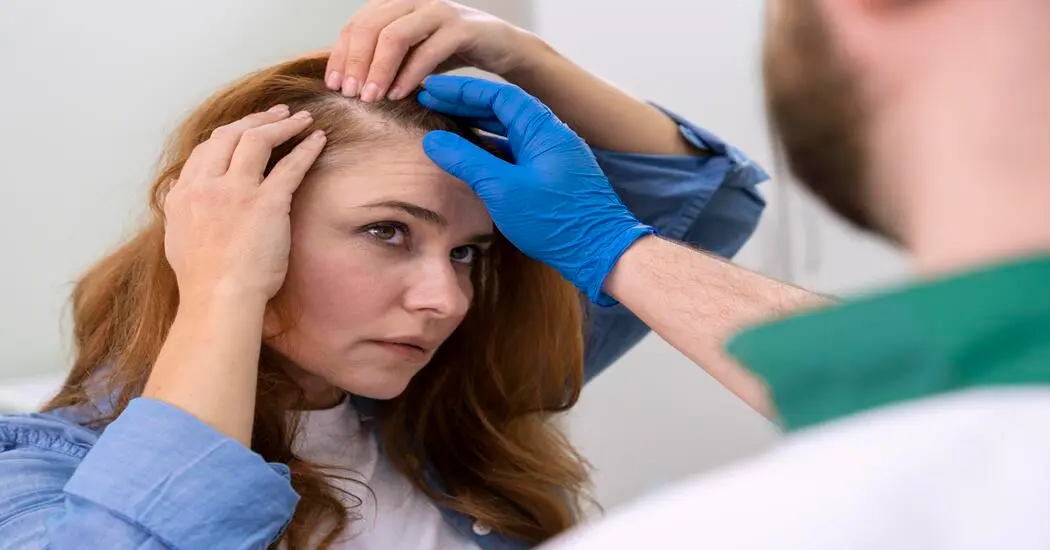
Female pattern hair loss (androgenetic alopecia) is the most common cause of hair thinning in women — a gradual process that usually shows up first as a widening centre parting.
It can begin at any age but becomes more noticeable with time, particularly around menopause. At Derma Solutions, Dr. Mamta Vijay identifies the stage and pattern of hair loss before recommending a treatment plan — because the earlier it's addressed, the more effectively progression can be slowed and regrowth supported.
What Drives Female Pattern Hair Loss
Female pattern hair loss develops from a mix of inherited genes, hormonal shifts and age. Understanding the drivers helps set realistic expectations for treatment.
Genetic Predisposition
A strong genetic link runs through female pattern hair loss — it's common in women whose mother or sister has also experienced thinning.
Hormonal Factors
Shifts in androgen levels, or greater follicle sensitivity to them, play a central role — often triggered by menopause, pregnancy or PCOS.
Progressive Thinning
Unlike male pattern baldness, it usually presents as diffuse thinning across the scalp rather than a receding hairline.
Follicle Miniaturization
Over time, affected follicles produce progressively finer, shorter hair — reducing overall density.
Age of Onset
It can start in the mid-20s or 30s for some women, but becomes markedly more common after menopause.
Treatment Options
Minoxidil, oral anti-androgens and low-level laser therapy are among the options — early intervention tends to work best.
About one in three women experience female pattern hair loss at some point, rising sharply after menopause — early evaluation makes management far more effective.
Stages of Female Pattern Hair Loss
Dermatologists commonly describe five stages of female pattern hair loss:
Who Does It Affect?
Female pattern hair loss can begin at any adult age, and your risk is higher with:
How Is It Diagnosed?
Derma Solutions diagnoses female pattern hair loss through a detailed scalp examination and a review of family history and the hair-loss pattern. As a leading dermatologist in Jaipur, Dr. Mamta Vijay first assesses the stage of hair loss, then recommends further tests only where needed:
Treatment Options
Female pattern hair loss can't reverse itself without treatment, but several evidence-backed options can slow it down and support regrowth:
Minoxidil
A topical scalp treatment and usually the first line of treatment for female pattern hair loss.
Finasteride
A prescription oral medication that can be used, sometimes alongside a ketoconazole 2% shampoo, under medical guidance.
Hair Transplant
Healthy follicles are taken from donor areas and moved to bald or thinning parts of the scalp.
PRP Therapy
Platelet-rich plasma from your own blood is injected into the scalp to stimulate hair growth.
Red Light Therapy
Low-wavelength red light treatment applied to the scalp to support hair growth.
Styling & Camouflage
Certain hairstyles, wigs or hair weaves can help while medical treatment takes effect.
Not every treatment works the same way for every woman — Dr. Mamta Vijay helps you find the option that fits your stage of hair loss and lifestyle.